

Omega created an interesting new retro timepiece that could become a serious alternative to best selling dress watches at brands such as Rolex, Patek Philippe, and even Grand Seiko.
The Omega Globemaster (originally launched in 2015), with its distinctive fluted bezel, that closely resembles Rolex’s venerable Day-Date, has been discontinued. Whether Omega’s new collection is a replacement for the Globemaster, or represents a step in another direction, is debatable. What’s clear is that the Constellation Observatory is an all-new vintage-inspired collection, that’s better aligned to compete with classical dress watches, from top brands.
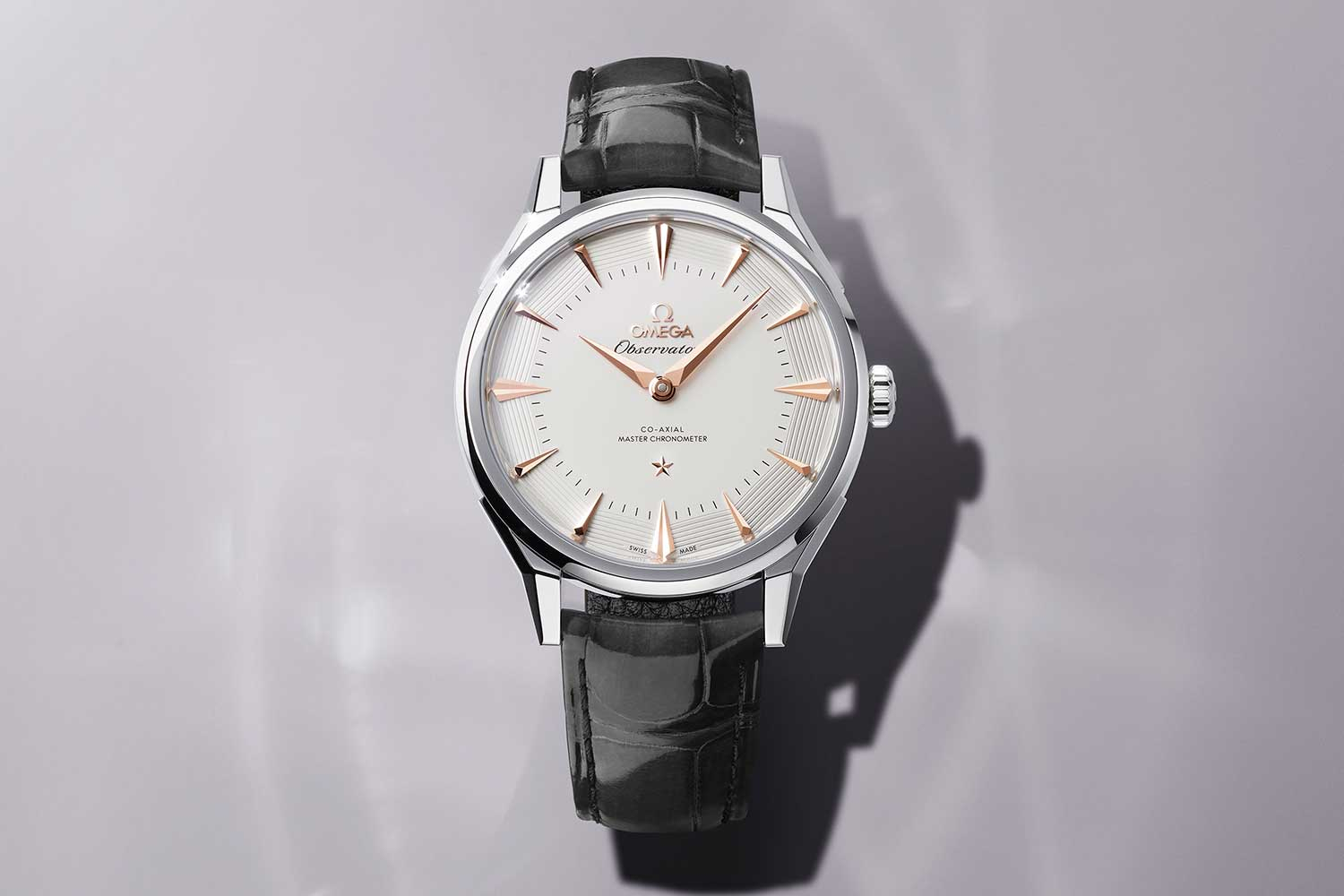
Neither Omega’s Constellation, nor the De Ville dress watch collections have become memorable in the way the Patek Philippe Calatrava (dating to 1932), or Rolex Day-Date (dating back to 1956) have. The Constellation Observatory aims to change that.
At launch, Omega introduced nine references, all fitted in 39.4 mm x 12.23 mm cases (47.2 mm lug-t0-lug), with 19 mm lug width, and powered by two new automatic Master Chronometer movements, that offer 60-hour power reserves, one for the steel models (caliber 8914), and another for precious metal versions (caliber 8915).
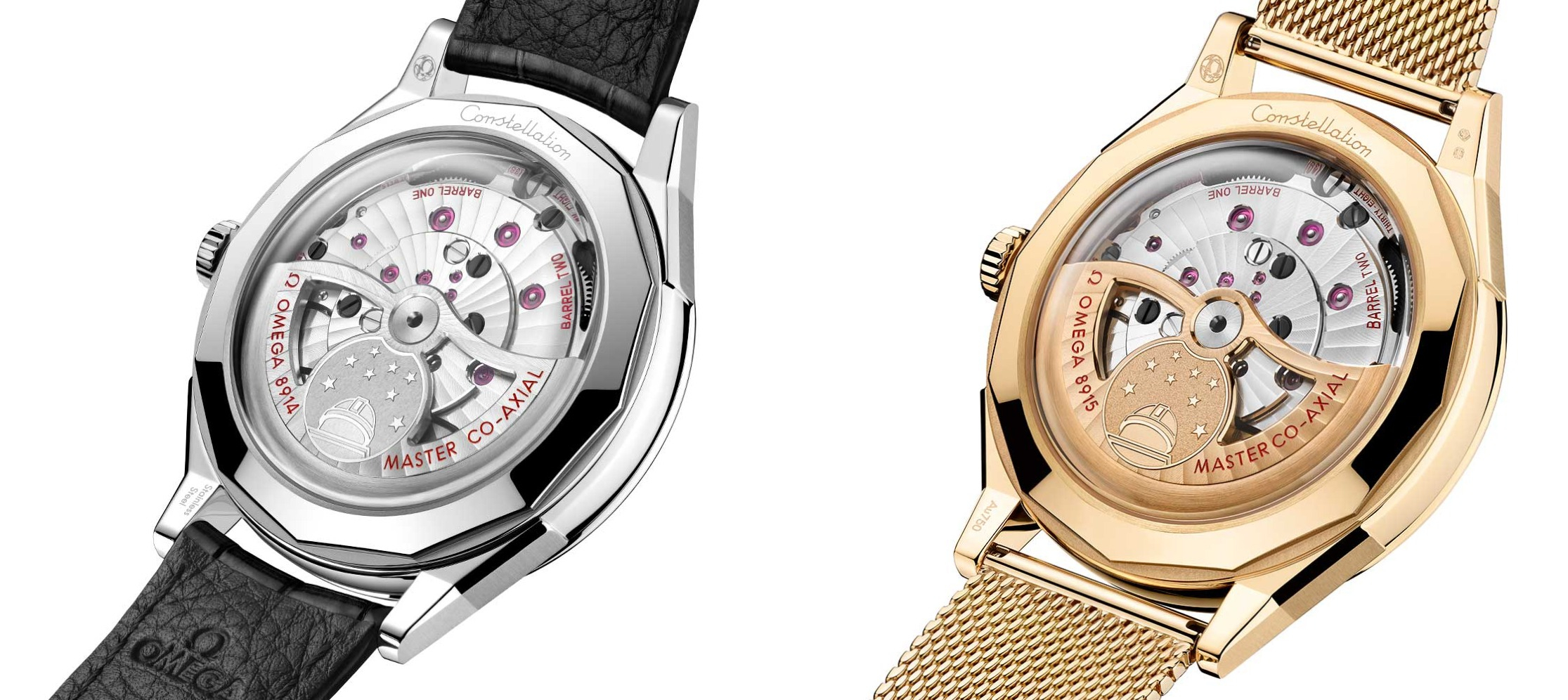
Being Master Chronometers, these watches will be regulated to -0/+5 seconds per day, fully-cased up, before leaving the factory. Ironically, setting the Constellation Observatory (historically, observatory watches are ultra-precise timepieces that are used as a reference in places like watch factories and scientific observatories) without having a running small seconds or center seconds hand for reference, will pose an additional challenge, each and every time you go to set your ultra-precise chronometer, in an ultra-precise way. You can basically watch the minute hand change as a reference to set the watch but this takes far longer than using a seconds hand, especially one with a stop seconds function.
Omega gives its precious metal models extra features, to further distinguish them from the standard stainless steel models. The precious model movements feature 18K gold oscillating weights, hand-guilloche work on the dials, and each precious metal timepiece in the Omega Constellation Observatory collection is delivered in a dedicated wooden presentation box featuring the Constellation Observatory emblem in marquetry.

All versions look attractive, but there’s a very significant price delta between the steel and precious metal models, and Omega tends to exaggerate this material difference more than most Swiss watchmakers.
Final Thoughts
Social media watch savants, especially the ones who routinely function as de facto Omega publicists, will point out that this is the first two-hand Master Chronometer, as the official press release and public relations representatives want them to. And it’s certainly worth noting, but it’s also worth noting that the lack of a seconds hand on a chronometer will make realizing the extreme precision of the Master Chronometer-level regulation, as a wearer, harder than if Omega had simply included a third hand.
To those of us that are free to opine, the leading selling points are not that this is the first Master Chronometer with a two-hand design, or that this marks the first time 18K Moonshine™ gold has been used in an Omega movement. What really makes the Constellation Observatory notable, are the aesthetics, including the distinctive dodecagonal pie-pan dial, dog-leg lugs, and kite-form indices.
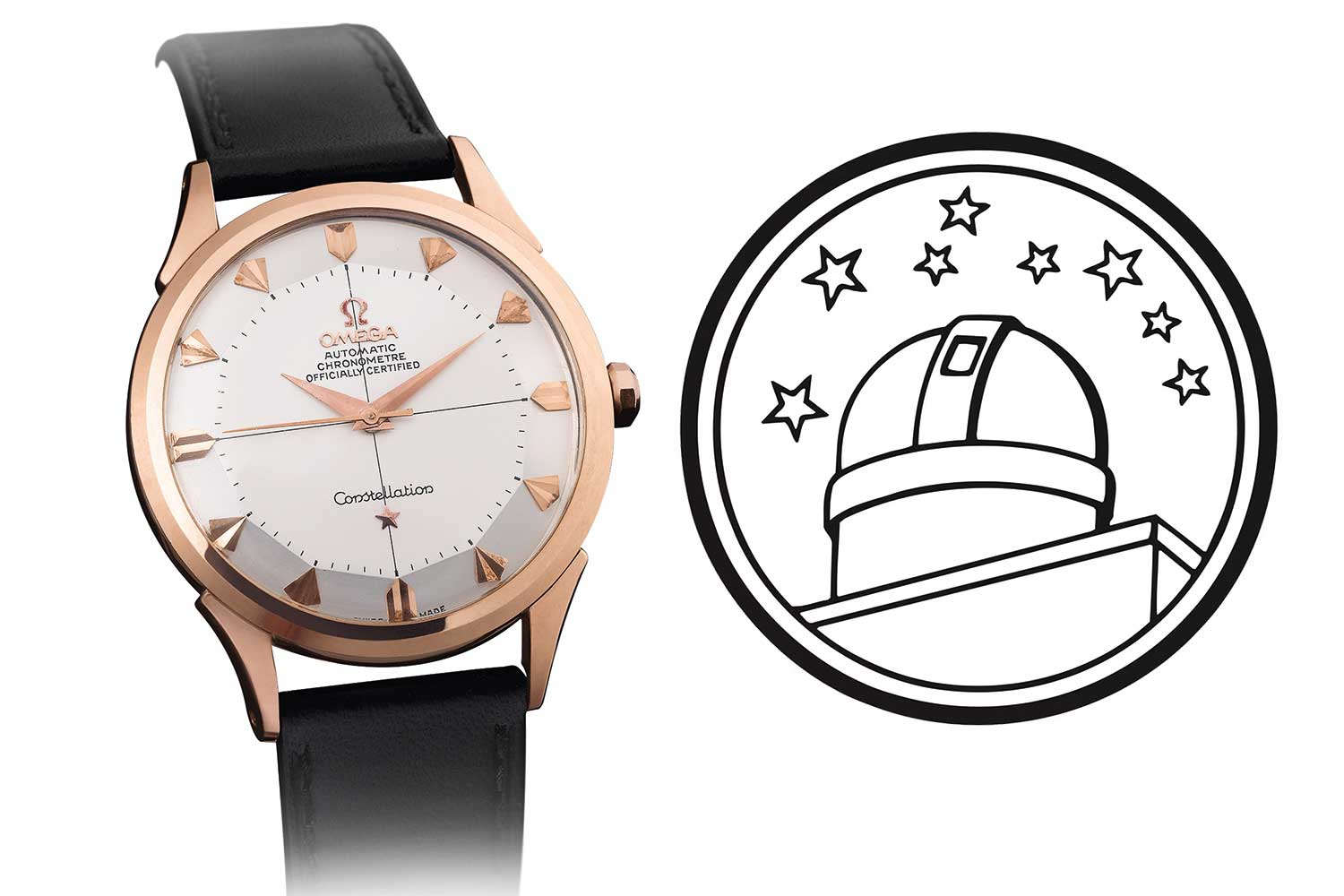
This is a gorgeous throwback dress watch, that pulls from the original 1952 Constellation collection, effortlessly merging history with modern timekeeping. In addition to the aforementioned Calatravas and Day-Dates, modern dress watches from Grand Seiko and models such as the Rolex 1908, are certainly also in Omega’s sights. The real marketing question does not likely come down to whether the new Constellation Observatory can compete visually — it clearly can. The true feasibility test will be whether consumers are willing to pay $10,900 and up for an Omega dress watch, particularly a two-hander.
Photos by Omega.
