
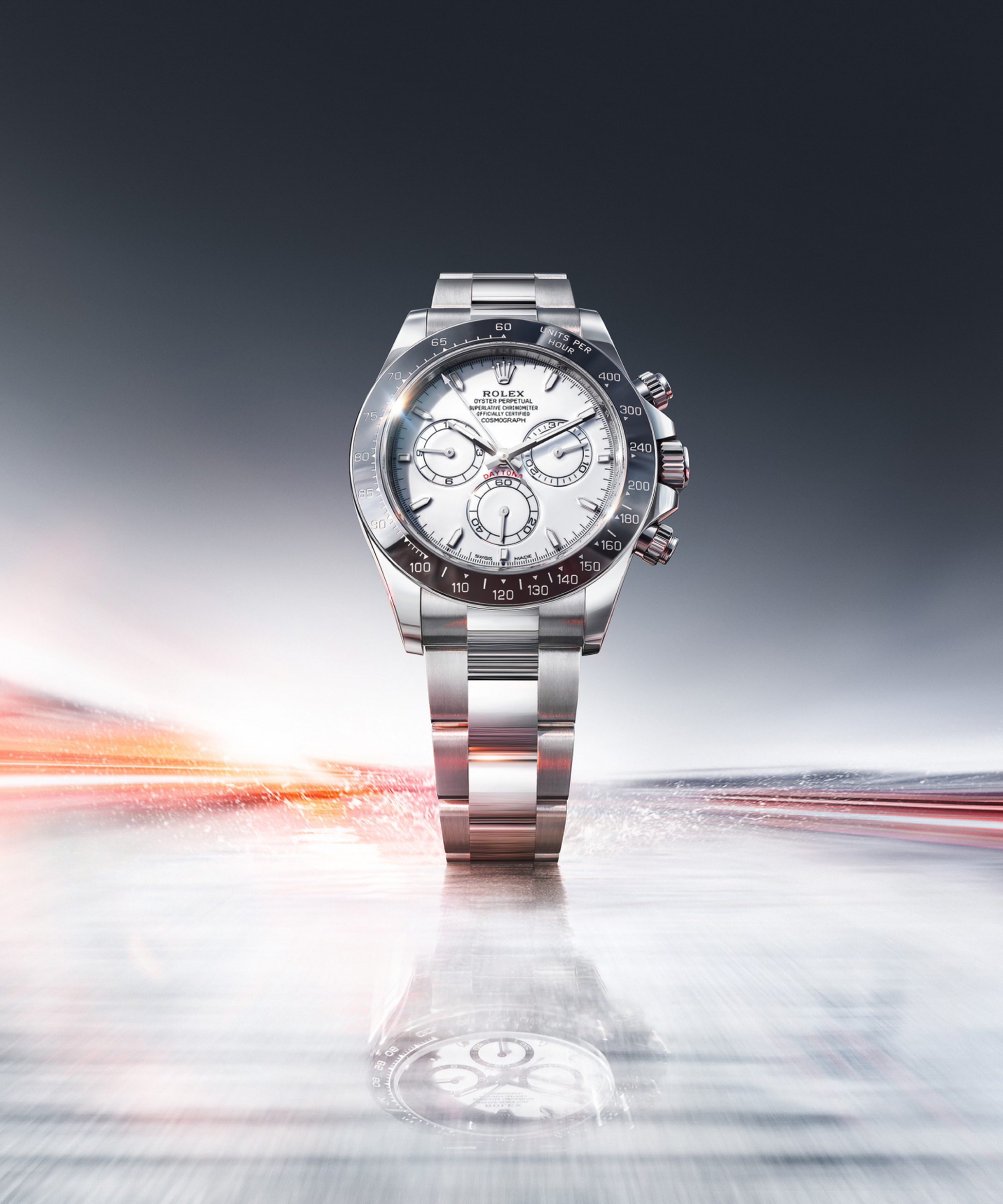
In the realm of serious watch collecting, today Rolex introduced a pretty serious off-catalog variant of the brand’s most coveted timepiece, the Daytona.
The 2026 Daytona Rolesium Ref. 126502, features a 904L Oystersteel middle case, bracelet, and pushers, with a sapphire caseback and bezel ring crafted in 950 platinum.
Interestingly, the ceramic bezel has been given a gray appearance, that Rolex refers to as having a “metallic effect of an anthracite Cerachrom bezel in tungsten-rich ceramic, edged with a band of platinum.”
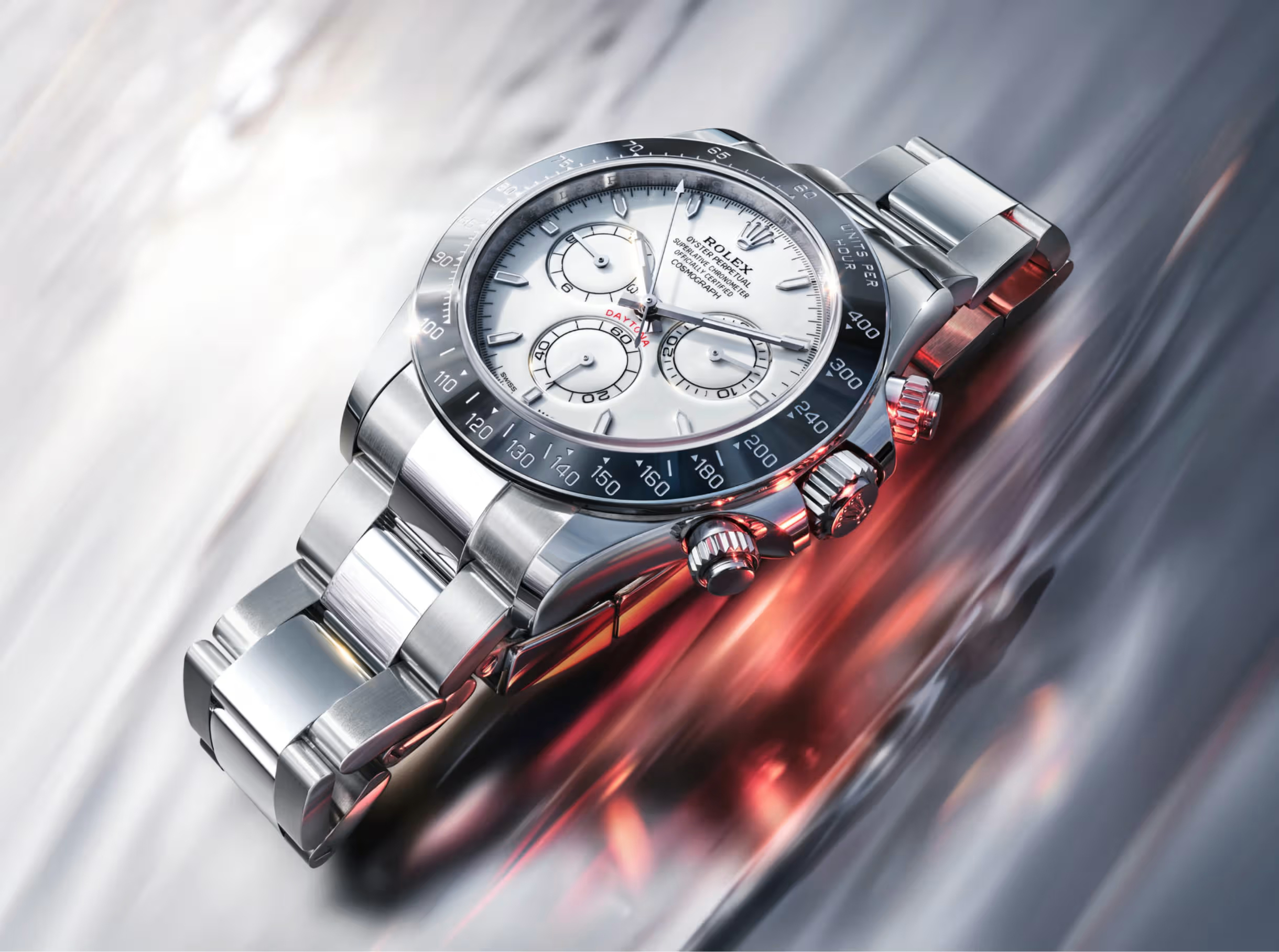
What truly differentiates this Daytona from the current generation black and white dial stainless steel models (Ref. 126500LN-0002 and -0001), the current platinum model (Ref. 126506), the discontinued white gold “Le Mans” Daytona Anniversary Edition (Ref. 126529LN), and the current off catalog yellow gold Le Mans Daytona (Ref. 126529LN), is a four-piece enamel dial, dubbed as the “Albino” by some.
Creation of the dial, according to Rolex, “is a striking example of Rolex dial-making expertise. Created using the ancestral grand feu technique, it required the development of a special production process. The ‘grand feu’ (literally ‘high fire’) method is so-called because, following application of the enamel powder mixed with water, the future dial is placed in a kiln heated to over 800° C. Traditionally, the liquid enamel mixture is applied to a metal base. In the case of this watch, however, it is coated onto ceramic plates – one for the dial itself and three others for the counters – which are fitted to a brass base after the vitrification firing phase.”
Ben Clymer at Hodinkee got early access to the watch ahead of Watches and Wonders, and deftly pointed out that this new Rolesium Daytona is likely inspired by the vintage Zenith-era Daytona (Ref. 16520), which features a glossy white dial, often referred to as a “Porcelain” dial (despite not being made of actual porcelain).
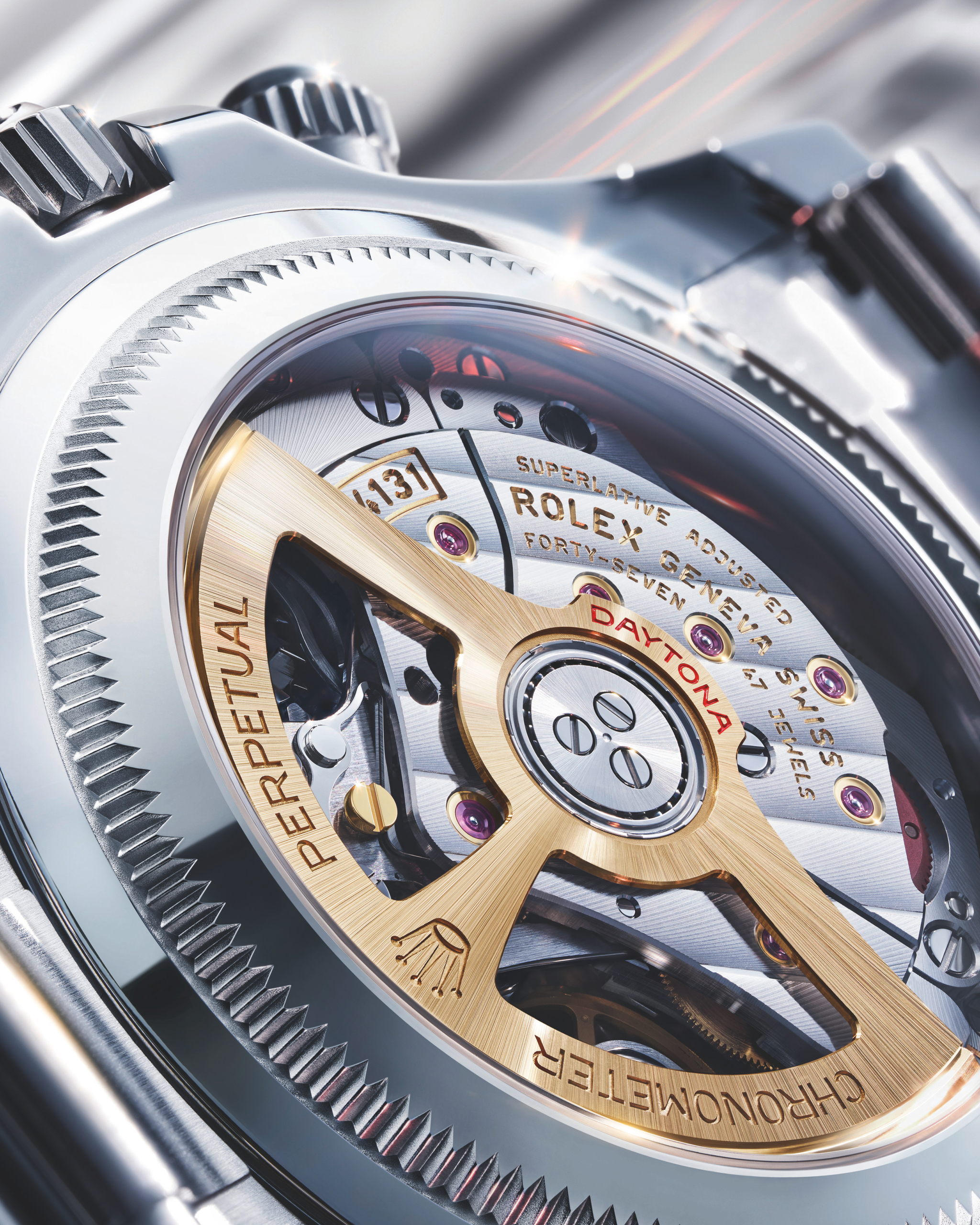
Flip the watch over, and you’ll see the current chronograph caliber 4131, with Geneva stripes, gold jewel sinks, and a gold skeletonized rotor, because this Daytona is one of the rare Rolex chronographs with a sapphire caseback. The platinum and Le Mans models are the only other Daytonas with open casebacks.
Additionally, “On the tachymetric scale of this new bezel, the numerals are presented horizontally, echoing the design of the first Cosmograph Daytona. These ‘suspended’ numerals are inscribed in a thoroughly contemporary font,” according to Rolex.
“The anthracite Cerachrom bezel on this new version of the legendary chronograph has a particularly striking metallic gleam. To obtain the desired effect, Rolex developed a specific type of ceramic composed of zirconia enriched with tungsten carbide, for which a patent application was filed. Moulded into the bezel, the graduation on the emblematic tachymetric scale has been restyled: the numerals are displayed horizontally, as on the original 1963 model. These ‘suspended’ numerals are inscribed in a thoroughly contemporary font.”
Final Thoughts
With the current stainless steel Daytonas hovering at $16,900, Rolex is asking more than triple that price, at a retail of $57,800 this low-volume off-catalog model, is made exclusively for serious (investment grade) Rolex collectors. The dial is made using a grand feu technique, but is not actually high-end grand feu dial.
Photos by Rolex.
