

When you mention Zenith to someone that doesn’t closely follow watches, there’s a good chance they’ll think of the Zenith Electronics, not timepieces.
If you ask them about Rolex, I cannot ever recall meeting anyone who didn’t know the name, and what it represents. Yet, incredibly, at one point, Zenith supplied Rolex with movements, and should command similar recognition. That seems more like a marketing problem, than anything else, because Zenith has great movements, a respected name, awesome watches, and the financial backing of LVMH. Suffice it to say, these are two legendary watchmakers, that took two completely different paths, and one needs no correction, while the other is still a work in progress.
Even with the massive clout that comes with being part of LVMH (the world’s largest luxury group), Zenith still does not make enough revenue to be listed amongst the top 20 Swiss watchmakers, according to Morgan Stanley’s most recent rankings. That’s a shame, because the products, are stellar, and definitely warrant a higher ranking than the revenue suggests.
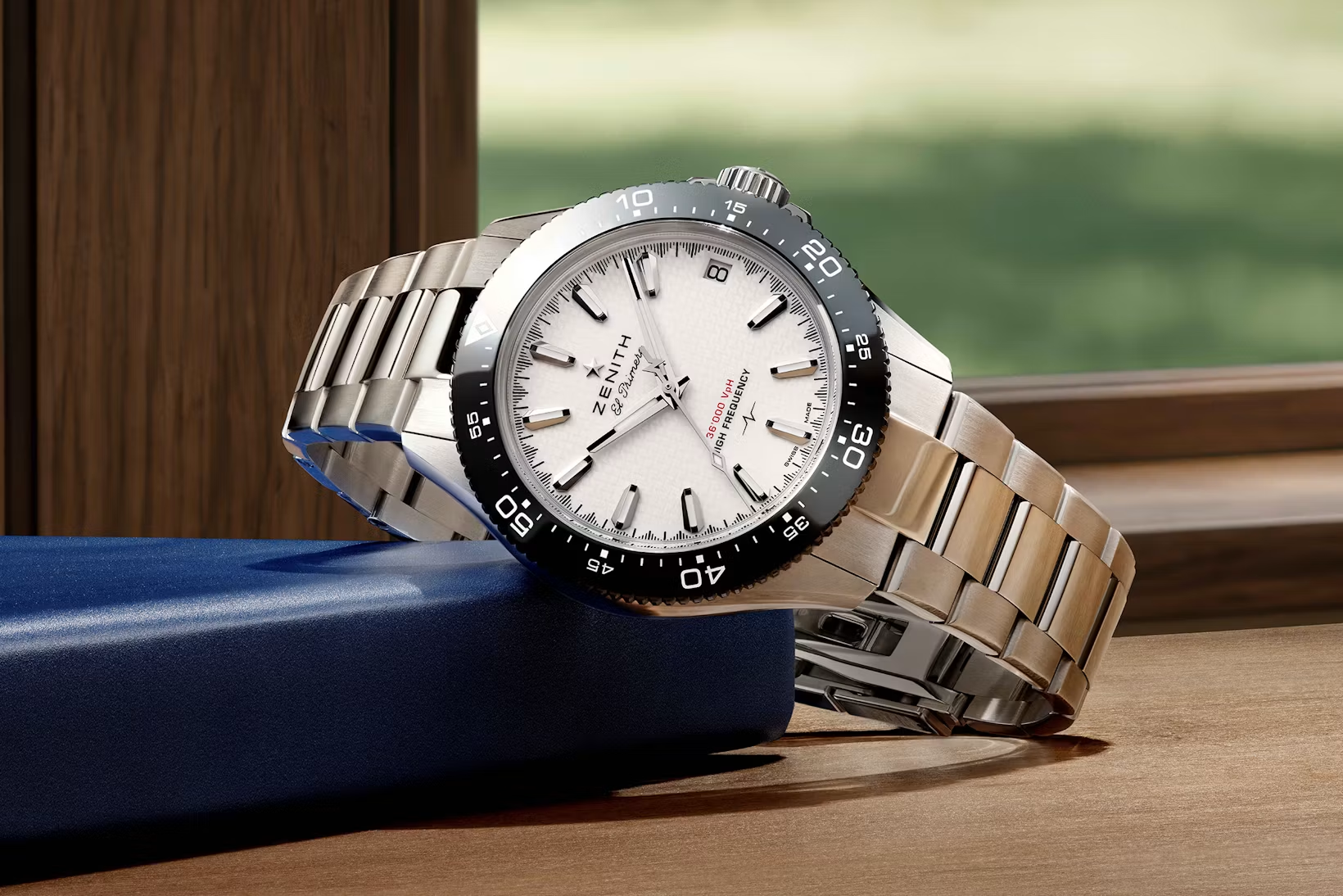
Zenith’s new Chronomaster Solo Sport is well sized for a broad variety of wrists and looks sharp. However, right off the bat, coming to market with four references, instead of say two, dilutes marketing, confuses customers, and complicates the entire process of selling watches from start to finish — and exemplifies a problem across the industry: too many SKUs. Clearly, Zenith is not alone in offering consumers too many, often confusing configurations, but if you want to move up to the top 20 on Morgan Stanley’s Swiss watchmaking list, and you have the financial backing, the watchmaking prowess, the historical provenance, and great looking timepieces, perhaps it’s a simple as focusing on best sellers and streamlining the catalog versus recklessly expanding, as so many watch companies do.
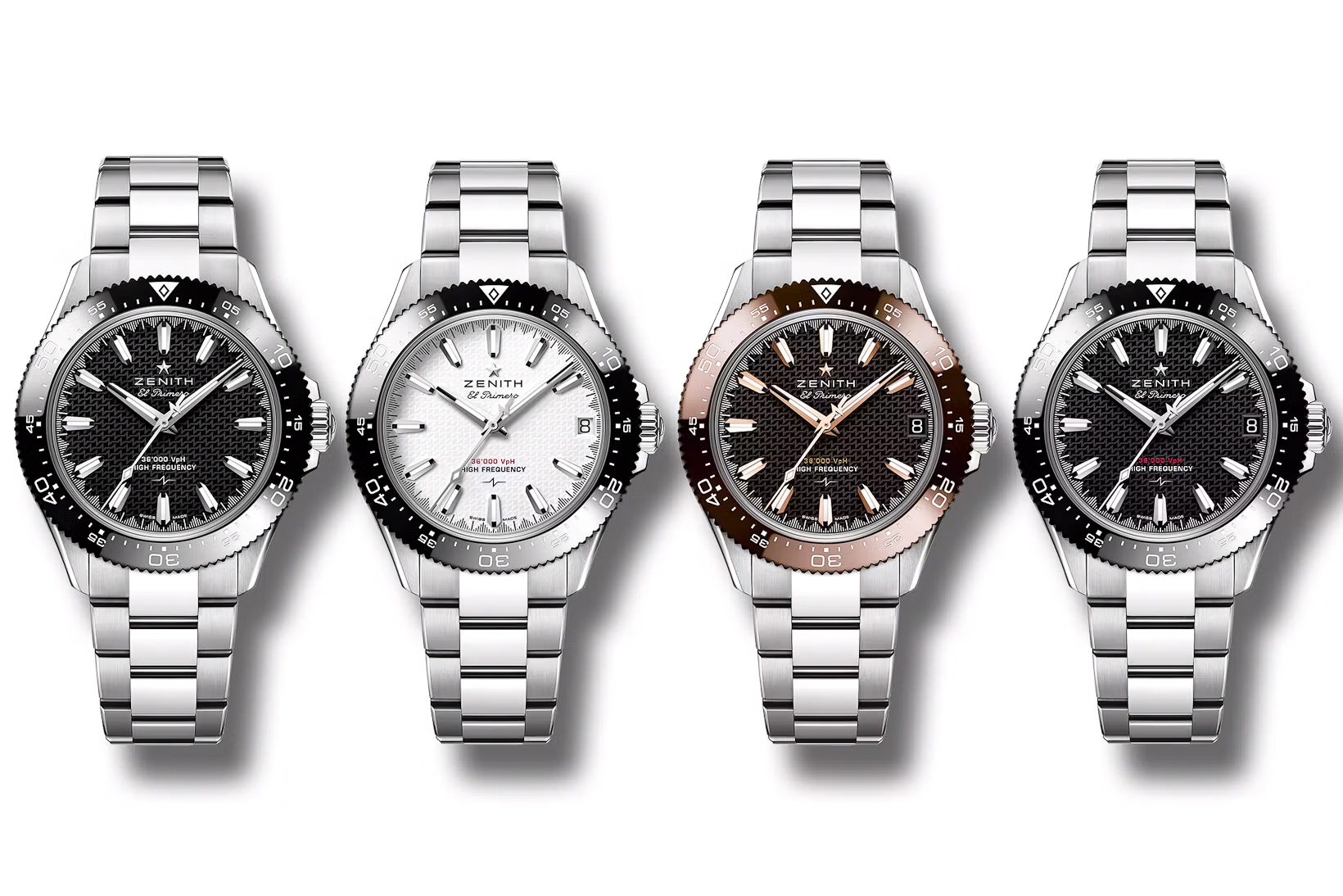
I seriously wonder how much research went into the marketing plan that brought out four references like this, at prices comparable to venerable Rolex Submariners, because the question then becomes: do I buy the Submariner or the Zenith? And the answer, if they’re priced virtually the same, is almost always the Submariner, even if it’s hard to get.
As evidenced by comment sections on Instagram and watch websites, Zenith made some questionable decisions on a watch that already has challenges considering it looks like a dive watch, but is not really a dive watch.
If you’re going to test the market by offering a pseudo dive watch, why not make just the black and white dials, with no date, keep the sub $10K price, and see how it sells, and go from there. Instead of that, Zenith dropped three date-equipped models, costing $10,900 apiece which is $1,100 more than the single no-date reference, that costs a much more appealing $9,800.
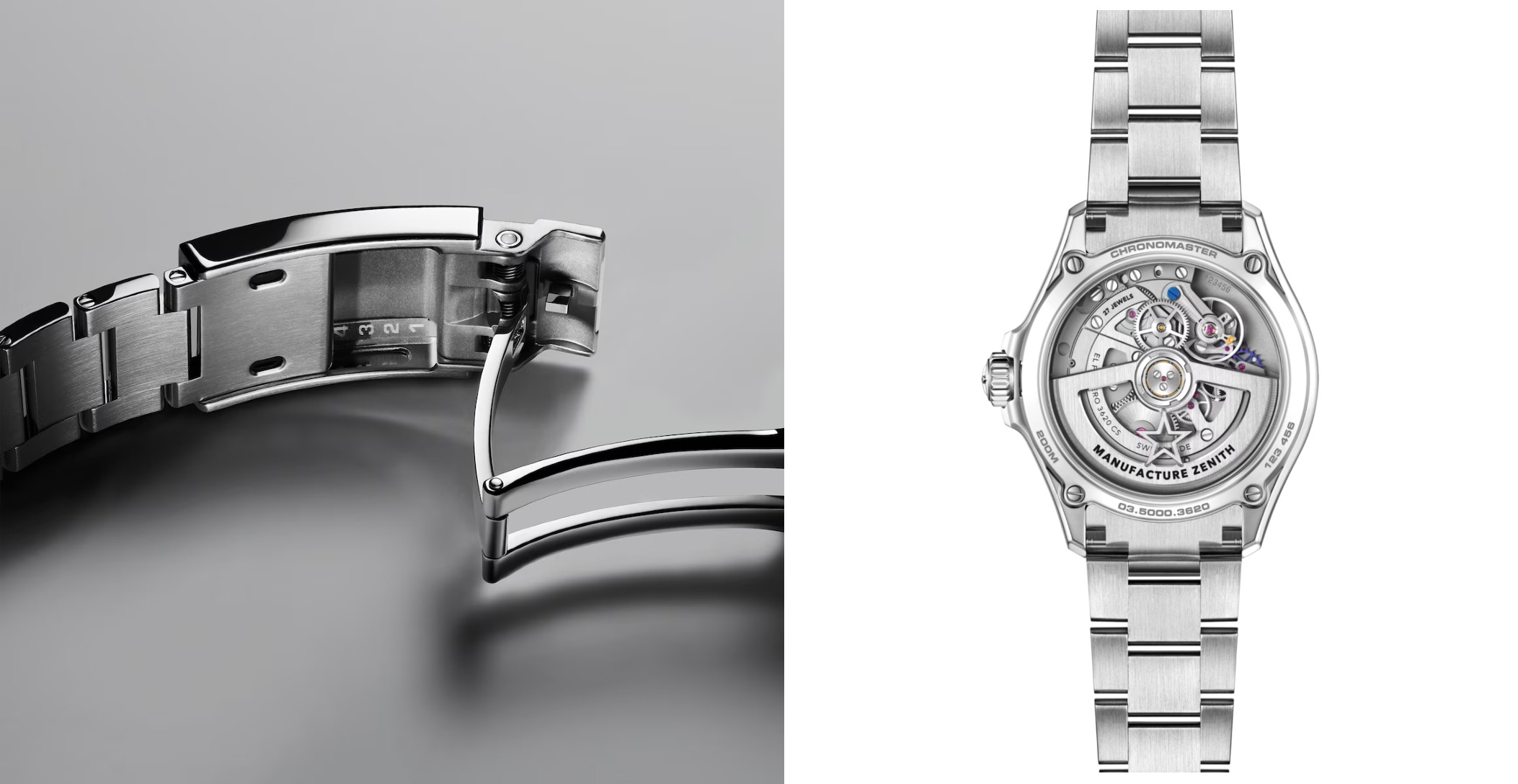
The Chronomaster Solo Sport case looks great at 40 mm x 13.13 mm, with a lug-to-lug of 46 mm. And the new Zenoclasp, with 2.5 mm adjustments for a total of 10 mm of wiggle room, is an excellent upgrade to past bracelets. A 200-meter water-resistance rating is good, although a clear caseback, that’s secured by screws, versus a solid screw-in caseback, signals this is more of dive watch look, not an actual dive watch. The 5Hz beat rate of the El Primero movement is nice and I’m sure that will be a strong selling point, and overall this collection is attractive with its repeating pattern on the ceramic dial, and with a ceramic unidirectional rotating bezel. The shark-tooth shaped minutes/second track and faceted indices look great as well. Like with Zenith’s other Chronomasters, with chronograph functionality, this resembles popular models from other brands, without being a blatant copy, and it may become a great seller.
Final Thoughts
If you make a good product, that’s only one part of the marketing mix (product, price, promotion, placement). Offering too many references, however, hurts the mix. Pricing too high hurts the mix. Coming with one model, priced much better than the other three, hurts the mix. With all due respect, having a brand like Hublot (also owned by LVMH), positioned above Zenith, who in my opinion is not even in the same league as Zenith, hurts the mix. If you want to sell at the Omega, Rolex, Cartier level, you have to achieve synergy with your marketing. For starters, I strongly believe you have to place Zenith atop of Hublot, and if that cannot be done, sell one of the brands, so whoever is the steward, knows and communicates, without a doubt, that Zenith is the top dog. Not some sub brand under Louis Vuitton or Hublot. If you cannot even convince yourself of Zenith’s greatness, how will consumers?
Louis Vuitton is strong brand, Hublot makes tons of money, and I’m not denying that, but this isn’t a luxury handbag maker that also sells watches, or a supplier of ostentatious watches at obscene prices, this is true watchmaking and to compete against other true watchmakers like Rolex, you have to bring your A game, not a toned down version that plays nice with the rest of your own brands. Elevate the brand, not the price.
Learn more at Zenith.
Photos by Zenith.
