
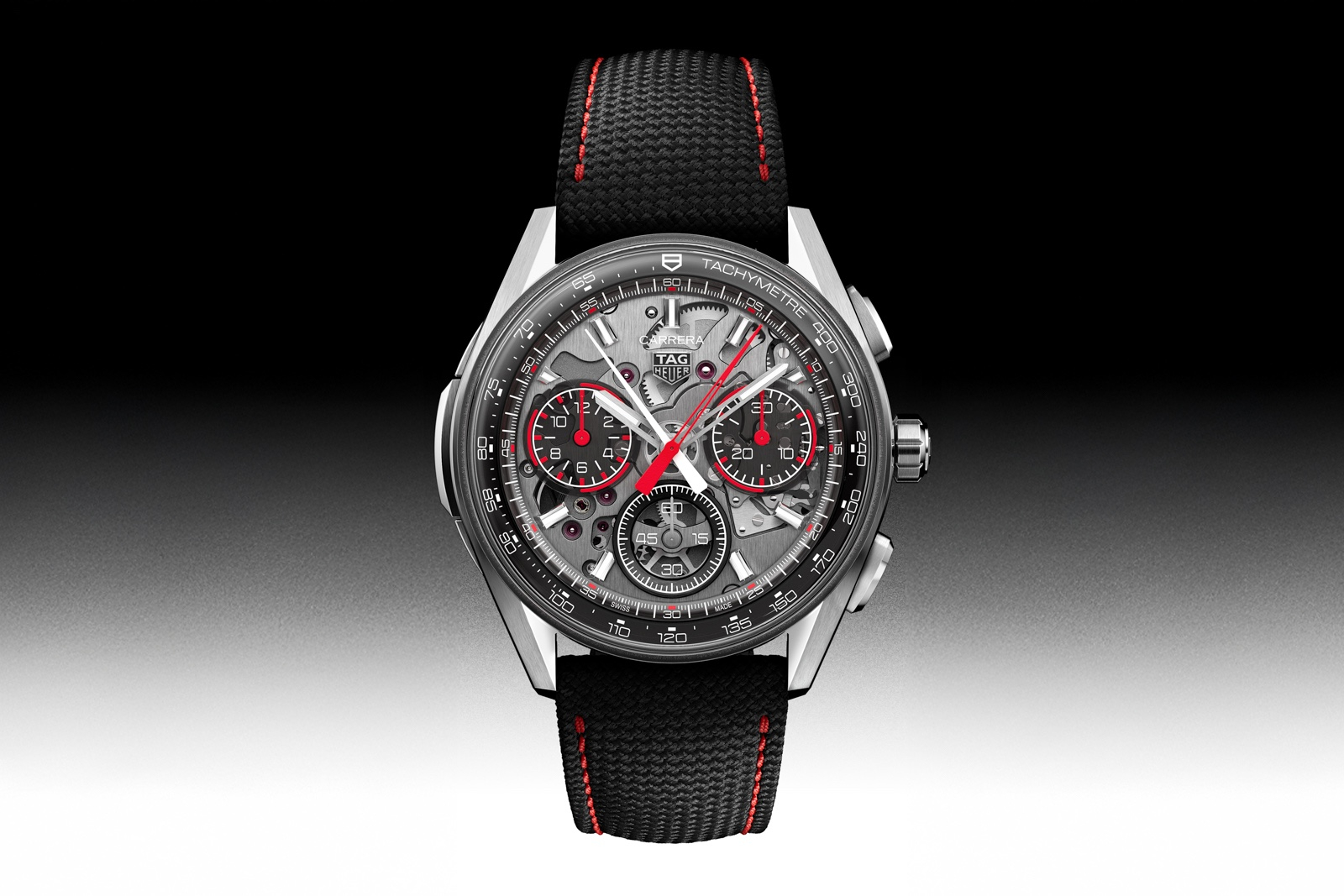
TAG Heuer debuted a racy new Carrera this week, which features a complicated split-seconds chronograph mechanism.
To be transparent, there are a lot of good, and a few bad points to discuss. Inclusion on Professional Watches, is typically an endorsement, in and of itself, however, we’re not going to glaze over two particular elements, that retract from the marketing proposition TAG Heuer has created.
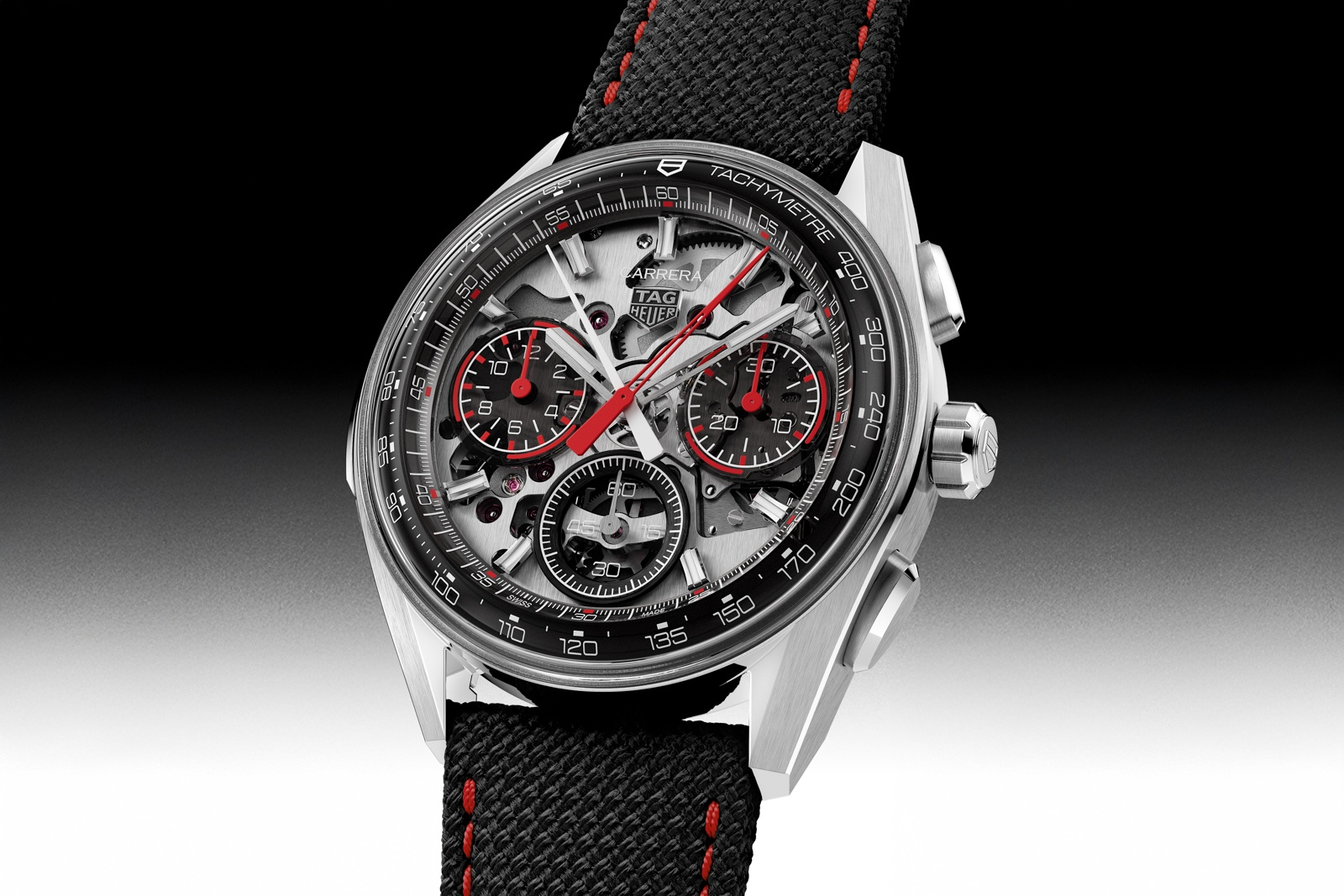
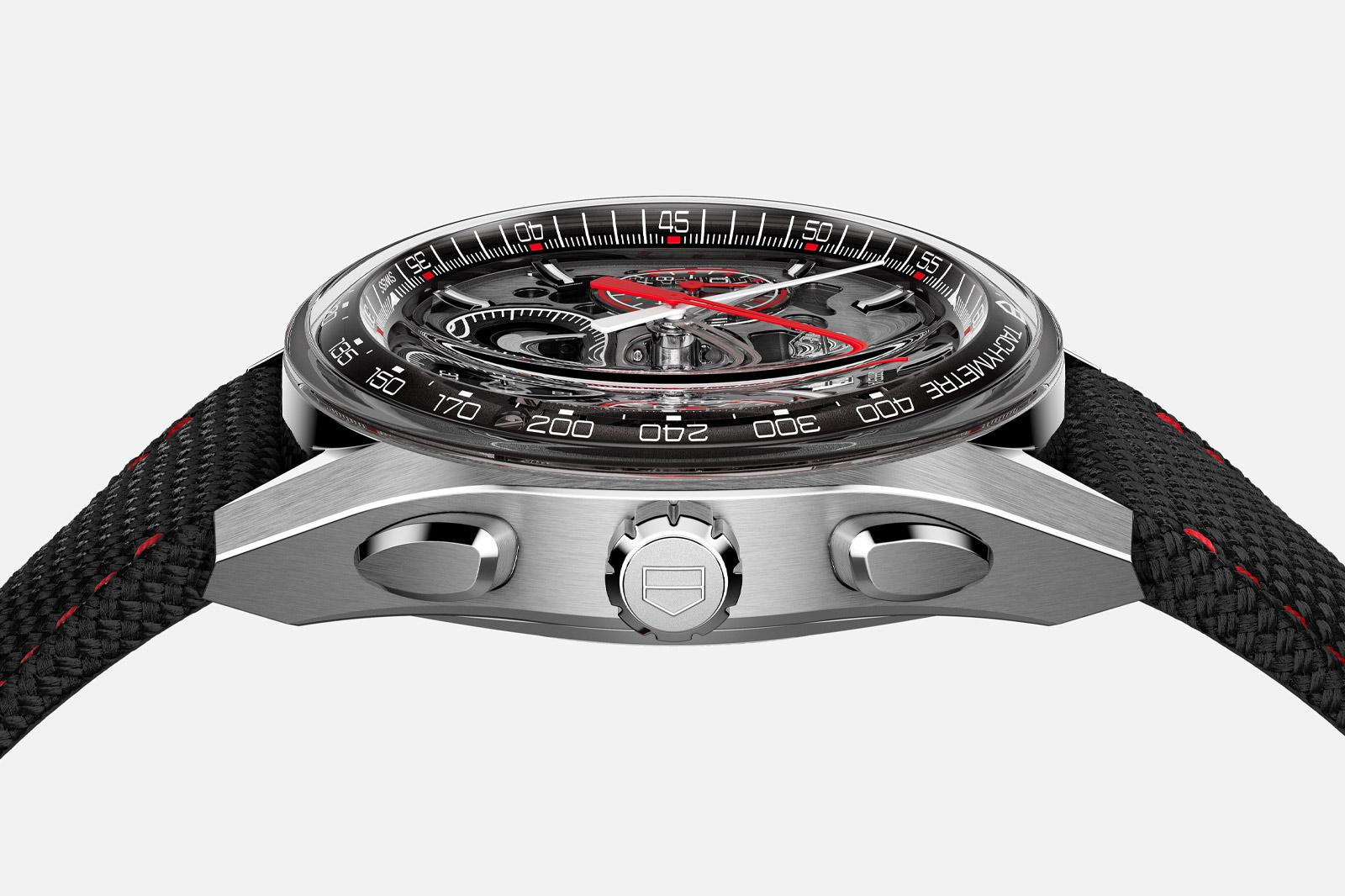
Presented in grade 5 titanium (an alloy that’s harder than pure grade 2 titanium), the Carrera Split-Seconds Chronograph measures 42 mm in diameter x 15.17 mm in thickness, with a box-type, bezel-less sapphire crystal protecting the dial side, with a slightly domed sapphire and titanium caseback secured by four screws. The 30-meters water-resistant case is a bit thick although overall, partially due to using a domed rear sapphire, although these dimensions are going to do well on a broad range of wrists, and the titanium keeps it nice and light.
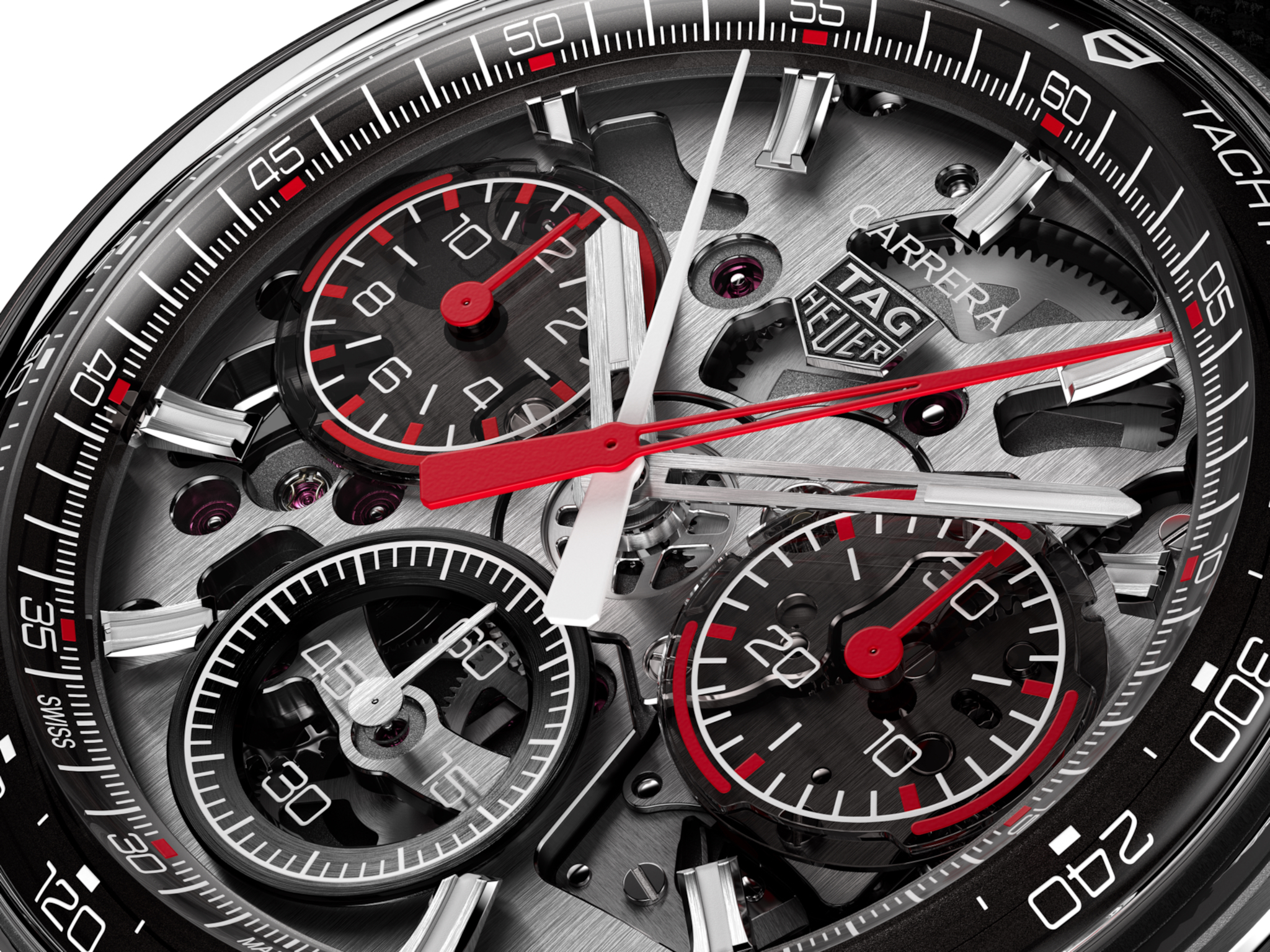
Featuring a clear sapphire dial that reveals the dial side of the openworked movement, along with applied indices, gray smoked chronograph subdials, and red/white/black color scheme, including twin chronograph seconds hands (regular and split-seconds), this is a truly avant-garde sports watch that lives up to the TAG Heuer moniker.
The marquee feature, a split-seconds chronograph (also called a rattrapante), offers a way to record lap times. Thanks to two centrally mounted chronograph seconds hands, the primary hand in red, and a additional hand white, the wearer can record an intermediate “lap” time while the main chronograph (including the chronograph hours and minutes counters) continue to run. To do so, a start/stop pusher at 2 o’clock and reset pushpiece at 4 o’clock control the main functions, and then a split-seconds pusher on the left case flank at 9 o’clock allows you to stop the white hand, to read an intermediate lap time, and then hit it again to immediately catch back up and perfectly synchronize with the primary chronograph seconds hand. Ultimately, a split-seconds chronograph, allows the wearer to time two separate events that start at the same time but end at different intervals.
Mechanically powering this rare split-seconds chronograph function is caliber TH81-01 which is derived from a Vaucher caliber VMF6710, which is a premium integrated chronograph movement that beats at a high rate of 5Hz, allowing 1/10th of a second precision. Boasting automatic winding, twin column wheels (for the split-seconds function), a vertical clutch, a free sprung balance, an adjustable balance bridge, 350+ total components, and a 65-hour power reserve (55 hours when the chronograph is engaged), this is high-tech mechanical horology befitting the official timekeeper of F1. An older version, caliber TH81-00, powers a number of TAG Heuer Monaco timepieces, though, this is the first caliber of its kind made for a Carrera.
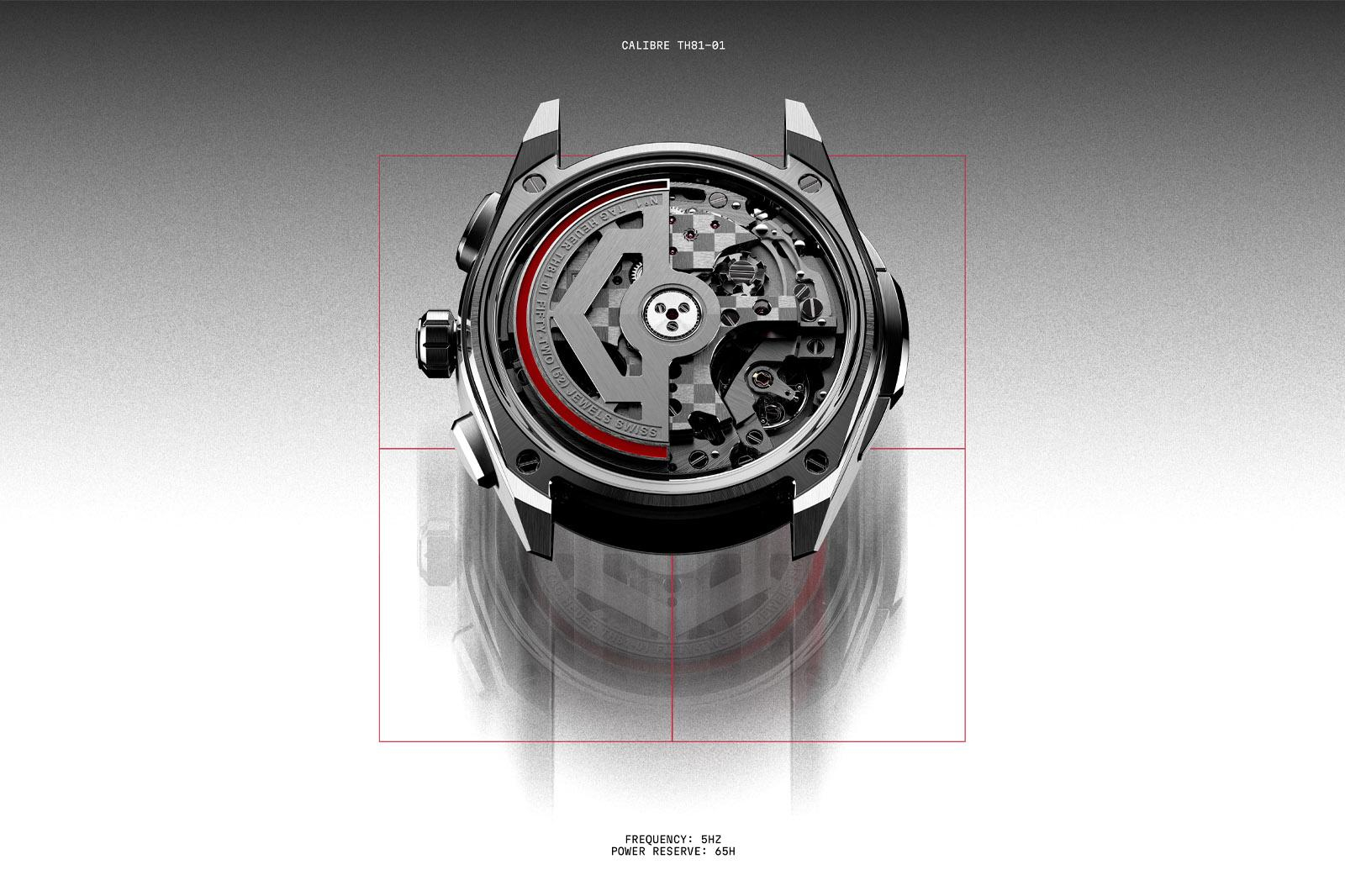
In addition to the unique split-seconds complication, and adjustable balance bridge, another less common element worth noting, is that TAG Heuer used titanium for the mainplate and bridges, which delivers a much lighter weight than the most commonly used material: brass.
Moreover, TAG Heuer claims the movement is hand-finished, which is rather unusual for a brand that typically applied little if any hand-finishing. For instance, there’s a checkered flag motif on that bridges, that’s applied manually square-by-square. There’s also black polishing, and straight graining, however, despite reports of hand beveling of the bridge and component edges, we can only visually confirm the edges have been polished, not beveled. Unfortunately, movement decoration (particularly beveling), is an area where brands tend to leave the descriptions as ambiguous as possible, which often leads to media inaccurately thinking the finishes are more elevated than they really are.
Final Thoughts
TAG Heuer’s Split-Seconds Carrera Chronograph (Ref. CDD2180.FT8120) comes on a sporty black rubber strap with textile embossing and red stitching, and a titanium DLC folding clasp. Each timepiece is limited edition and is individually numbered and presented in special premium packaging.
This launch officially took place in Milan, Italy, as part of TAG Heuer’s parent company run, LVMH Watch Week 2026, which also showcase a slew of new timepieces from Louis Vuitton, Zenith, Bvlgari, Hublot, Daniel Roth, and Gerald Genta. Some media reporting on this were flown in, so bear that in mind when reading reports that gloss over certain details. The biggest detail being a TAG Heuer, with a retail price of $127,000. It’s an excellent timepiece, but even if the titanium case was in precious metal, six-figures for a TAG Heuer, is a massive sum. Not to mention, at that price, you would expect the movement to come with hand-beveled component edges, which it does not appear to have.
